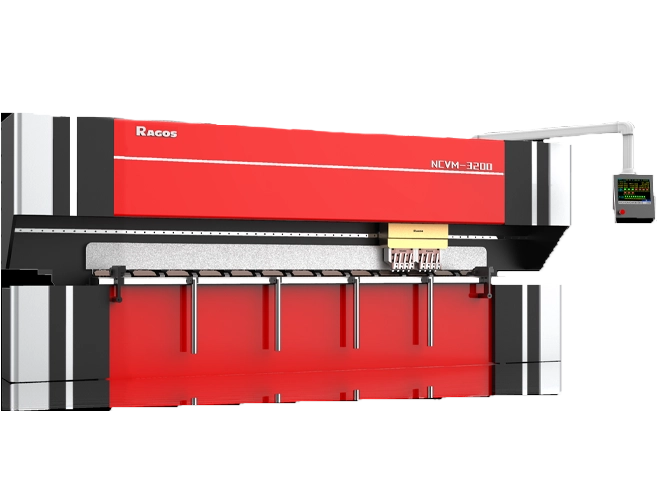


فرامل CNC موفر للطاقة: كيف تعمل, التوفير الحقيقي, وأي نوع يجب شراؤه
أفرامل الضغط CNC الموفرة للطاقة يمكن أن يقلل فاتورة كهرباء ورشتك بنسبة 30–70٪ مقارنة بآلة هيدروليكية تقليدية تعمل بنفس حجم الإنتاج. هذا ليس ادعاء تسويقي — بل هو نتيجة قابلة للقياس لكيفية عمل نظام المحركات. مكابح الضغط الهيدروليكية التقليدية تشغل مضخاتها بشكل مستمر, يستهلك الطاقة الكاملة حتى أثناء وقت الخمول بين المنعطفات. أفرامل الضغط CNC الموفرة للطاقة يقضي على هذا الهدر من خلال توفير الطاقة فقط عندما تكون الآلة نشطة في التشكل.
يشرح هذا الدليل كيفية عمل أنظمة المحركات الموفرة للطاقة, كيف تبدو أرقام التوفير الحقيقي, وكيفية اختيار الجهاز المناسب لمتطلبات الإنتاج الخاصة بك.
ما هو فرامل الضغط CNC الموفرة للطاقة?
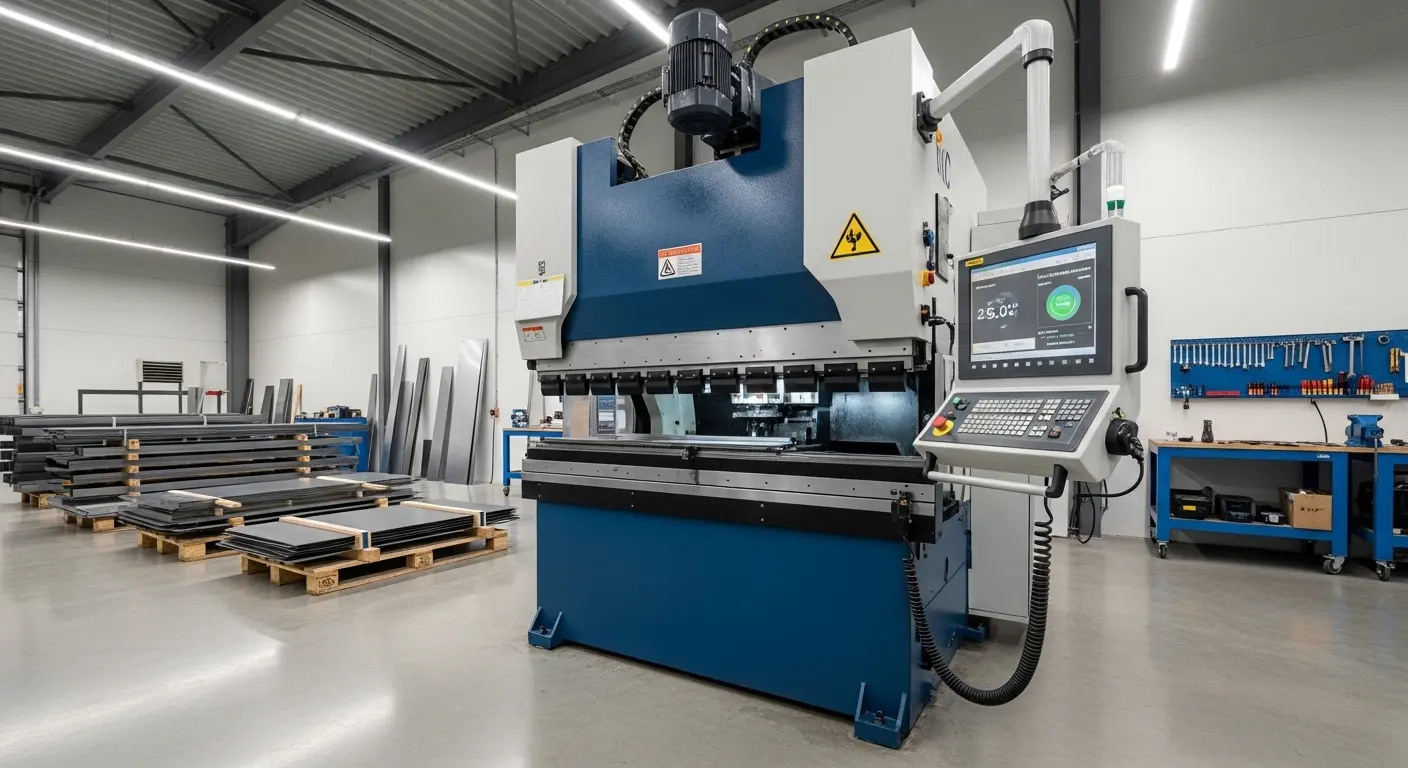
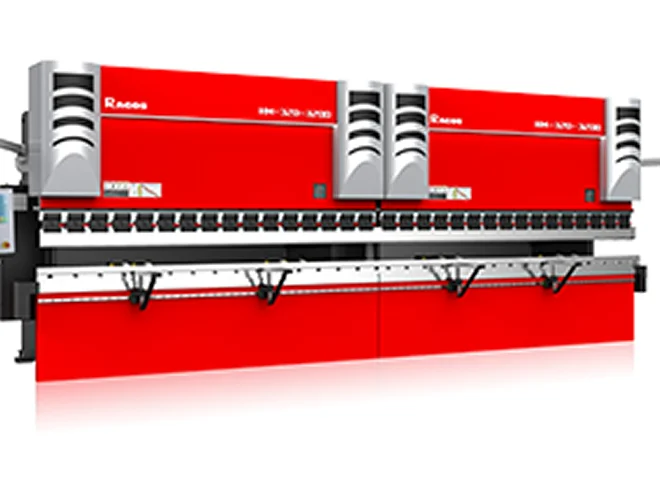
أفرامل الضغط CNC الموفرة للطاقة هي آلة ثني يتم التحكم بها بواسطة CNC ومزودة بنظام دفع يقلل من استهلاك الطاقة أثناء الخمول, النهج, وأطوار العودة — التي تنقل القوة فقط أثناء شوط الانحناء الفعلي.
تحدد أنظمة الدفع الثلاثة طيف توفير الطاقة في فرامل الضغط CNC الحديثة:
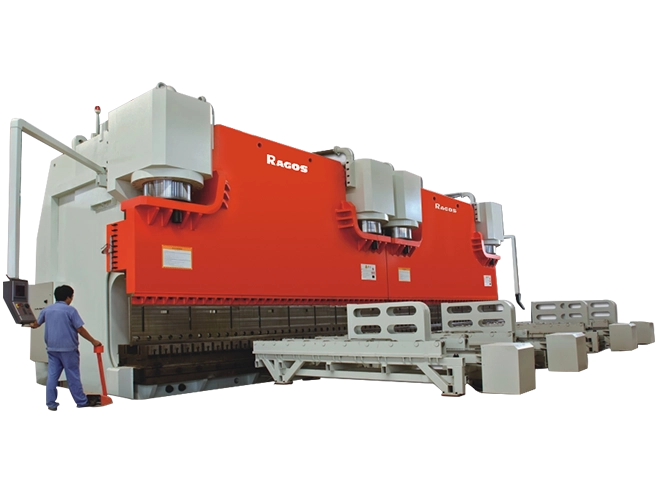
الهيدروليكي التقليدي — محرك كهربائي ثابت السرعة يشغل مضخة هيدروليكية بشكل مستمر طوال فترة التبديل. تعمل المضخة بكامل طاقتها سواء كانت الآلة تنحني, يقترب, أو الجلوس بلا حراك بين الوظائف. هدر الطاقة خلال وقت الخمول كبير.
المعالجة السريعة الهجينة — يحل محرك سيرفو محل المحرك التقليدي ذو السرعة الثابتة ويشغل المضخة الهيدروليكية عند الطلب. عندما لا تنحني الآلة, يقوم محرك السيرفو بإبطاء أو توقف — مما يقلل من استهلاك الطاقة بنسبة 30–70٪ مقارنة بالأنظمة الهيدروليكية التقليدية. هذا هو الطريق الأكثر شيوعا للترقية للتصنيع من المتوسط إلى التصنيع عالي الحمولة.
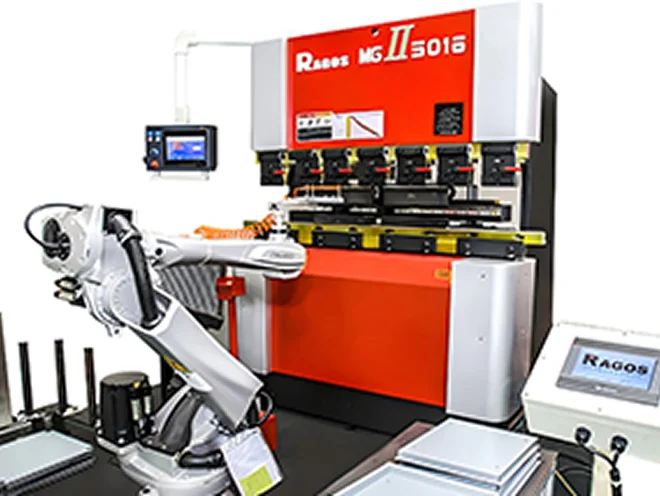
سيرفو-إلكتريك الكامل — يلغي السائل الهيدروليكي تماما. البراغي الكروية أو محركات الحزام التي تعمل بمحركات سيرفو تحرك الكرام مباشرة. استهلاك الطاقة يكون قريبا من الصفر أثناء الخمول. استهلاك الطاقة عند الحمل الكامل حوالي 5 كيلوواط ساعة — أي أقل بحوالي 67٪ من الآلة الهيدروليكية التقليدية التي تعمل بنفس المهمة.
في معظم ورش التصنيع، تستخدم فرامل الضغط فوق 150 طن, المحرك الهجين السيرفو-هيدروليكي هو الخيار العمليفرامل الضغط CNC الموفرة للطاقة الاختيار — يوفر انخفاضا كبيرا في الطاقة مع الحفاظ على سعة عالية لا يمكن للأنظمة الكهربائية الكاملة مجاراتها بنفس نقطة التكلفة.
لماذا يؤثر استهلاك الطاقة على فرامل الضغط
فرامل الضغط الهيدروليكية القياسية لا تستهلك الطاقة فقط عند الانحناء. يستهلك الطاقة طوال فترة تشغيل المحرك.
فكر في فرامل ضغط هيدروليكية تقليدية بوزن 130 طن مع محرك رئيسي بقوة 13.5 كيلوواط, تشغيل وردية واحدة مدتها 8 ساعات, 300 days per year:
13.5 كيلوواط × 8 ساعات × 300 يوم = 32,400 كيلوواط ساعة سنويا
بسعر 0.12 دولار لكل كيلوواط ساعة, هذا تقريبا3 دولارات,900 سنويا في الكهرباء لتلك الآلة الواحدة. تقضي الآلة جزءا كبيرا من كل وردية دون الانحناء النشط — بل تنتظر الأجزاء, أثناء إعداد المشغل, أو بين انتقالات الوظائف. المحرك يعمل طوال الوقت.
أفرامل الضغط CNC الموفرة للطاقة مع نظام سيرفو الهجين يقلل هذا الاستهلاك بنسبة 65٪ في نفس جدول الإنتاج:
32,400 كيلوواط ساعة × توفير 65٪ ≈ 21,000 كيلوواط ساعة مدخرة سنويا ≈ 2 دولار,يتم توفير 500 سنويا
اضرب ذلك في جهازين أو ثلاثة في ورشتك, ويصبح توفير الطاقة السنوي رقما ذا معنى. لورشة تعمل بثلاث آلات 130T, هذا تقريبا 7 دولارات,500 سنويا في توفير الكهرباء — قبل احتساب انخفاض تكاليف الصيانة.
للاطلاع على كيفية مقارنة نطاق فرامل الضغط الكامل في ملفات تعريف الطاقة, المجموعة كاملة من منتجات فرامل CNC للضغط يعرض التكوينات الهجينة والسيرفو المتوفرة عبر فئات الحمولة المختلفة.
مقارنة أنظمة المحركات الثلاثة: هيدروليكي, هجين, وسيرفو-إلكتريك
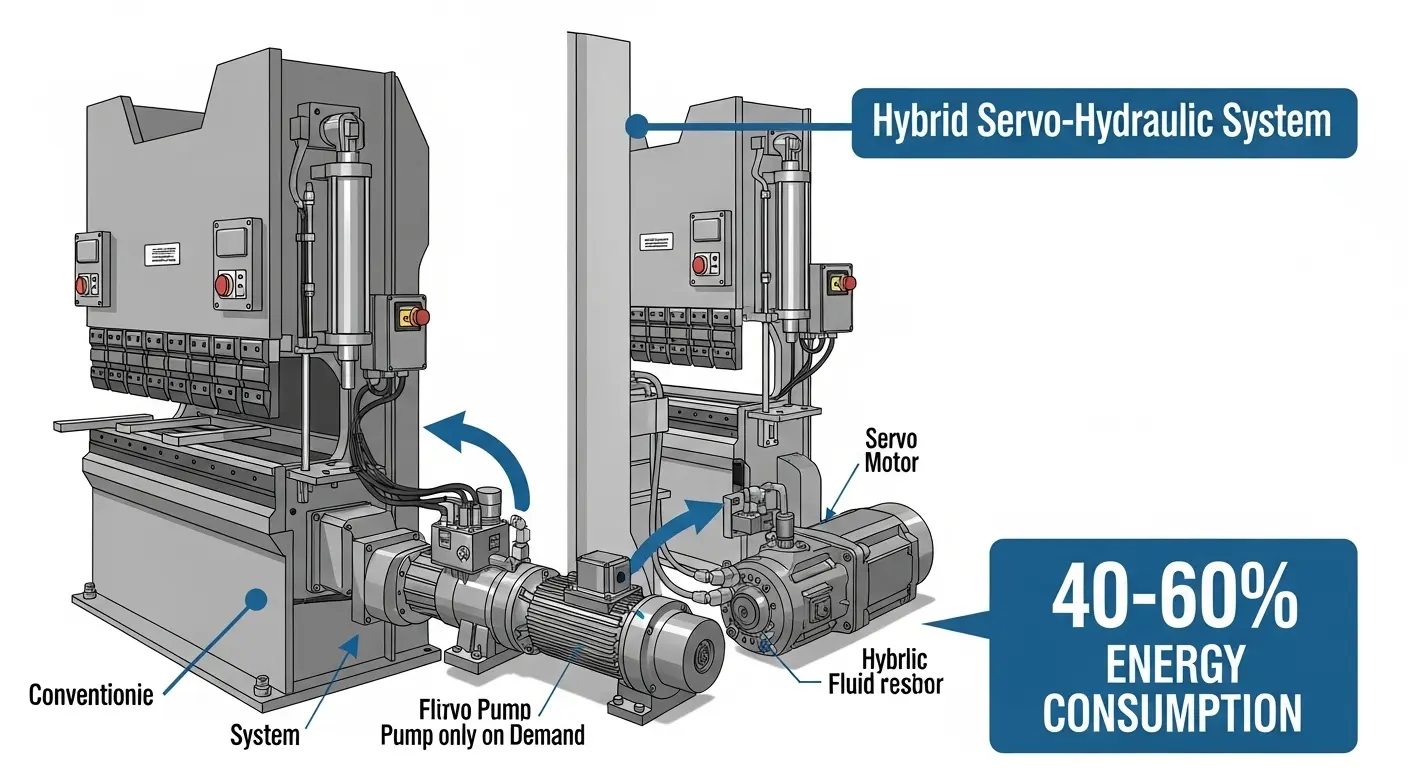
فهم أنظمة القيادة الثلاثة يساعدك على اختيار الأنظمة الصحيحةفرامل الضغط CNC الموفرة للطاقة لاحتياجاتك الإنتاجية الخاصة.
| ميزة | الهيدروليكي التقليدي | المعالجة السريعة الهجينة | سيرفو-إلكتريك الكامل |
|---|---|---|---|
| الطاقة عند الحمل الكامل | ~15 كيلوواط ساعة (100T) | 5–8 كيلوواط ساعة (100T) | ~5 كيلوواط ساعة (100T) |
| الطاقة أثناء الخمول | قوة المضخة الكاملة | قريب من الصفر | صفر |
| توفير الطاقة السنوي مقابل الهيدروليكي | خط الأساس | 30–70% | 67–80% |
| نطاق الحمولة | حتى 3,000T+ | حتى 2,500T | عملي حتى ~200 طن |
| وقت الإحماء | 15–30 دقيقة | أقل من 5 دقائق | فورية |
| مستوى الضوضاء | 75 ديسيبل | ~25–50 ديسيبل | ~20 ديسيبل |
| حجم الزيت المطلوب | عال (100–200L) | منخفض (حجم منخفض) | لا شيء |
| الأفضل ل | الأعمال الإنشائية الثقيلة | الحمولة المتوسطة إلى عالية, حجم عالي | الأعمال الدقيقة تحت 150 طن |
يغطي النظام الهجين أوسع مجموعة من سيناريوهات التصنيع العملية — فيعمل عند 100 طن بنفس كفاءة 600 طن, يحدث انخفاضا كبيرا في تكاليف الطاقة لديك, ولا يتطلب استثمارا رأسمائيا أعلى لآلة سيرفو-كهربائية فاخرة.
المحرك الكهربائي الكامل يفوز في أرقام الطاقة والضوضاء, لكنها محدودة في الحمولة. للورش المتخصصة في صفائح المعادن الدقيقة تحت 150 طن, إنه الخيار الأول. للأعمال الهيكلية الثقيلة فوق 250 طن, يوفر المحرك الهجين السيرفو-هيدروليكي أفضل توازن بين توفير الطاقة والقدرة الإنتاجية.
كيف يعمل فرامل الضغط CNC الهجينة الموفرة للطاقة
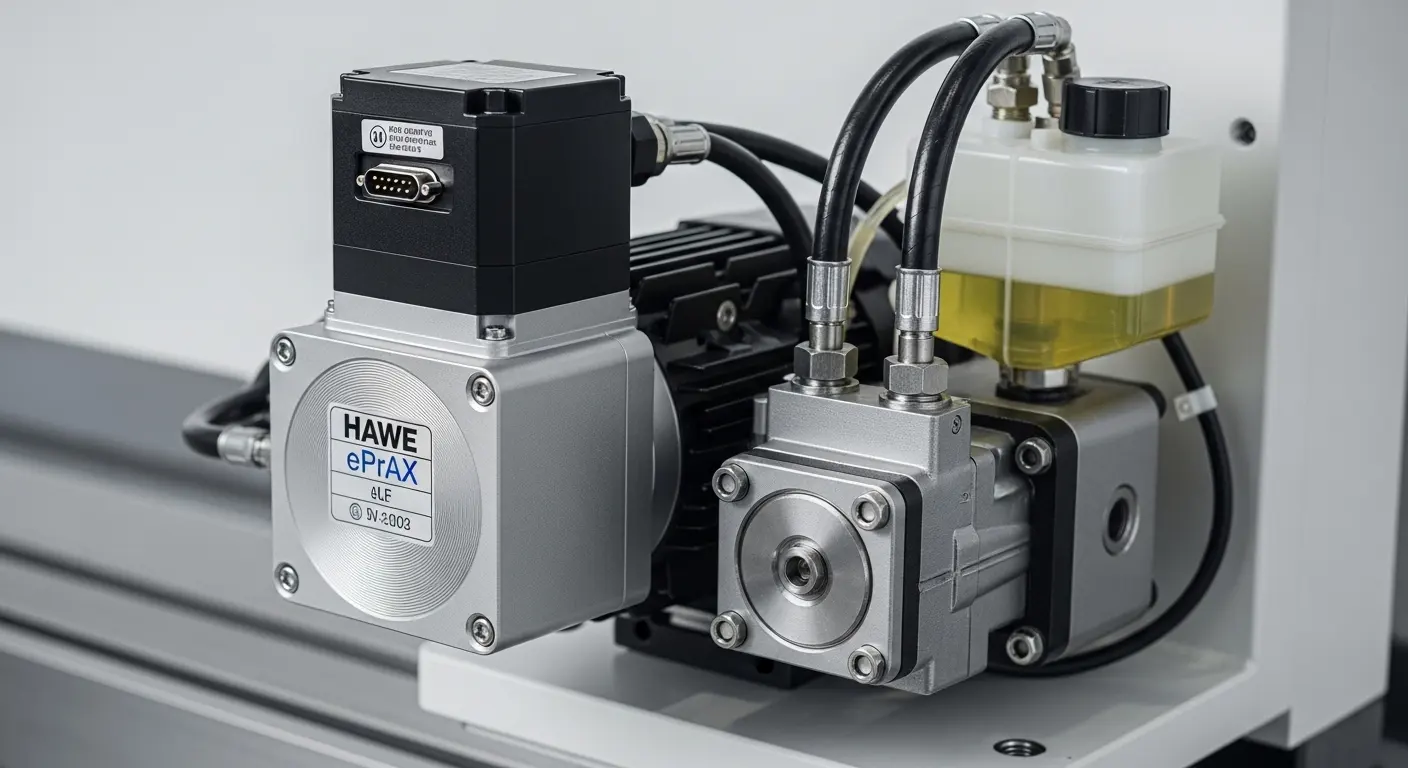
المبدأ التقني وراء الهجينفرامل الضغط CNC الموفرة للطاقة الأمر بسيط: استبدل المحرك الثابت السرعة بمحرك سيرفو, ودع الجهاز يقرر مقدار الطاقة بناء على ما يفعله فعليا.
أنظمة هاو إيبرراكس® وريكسروث DSVP
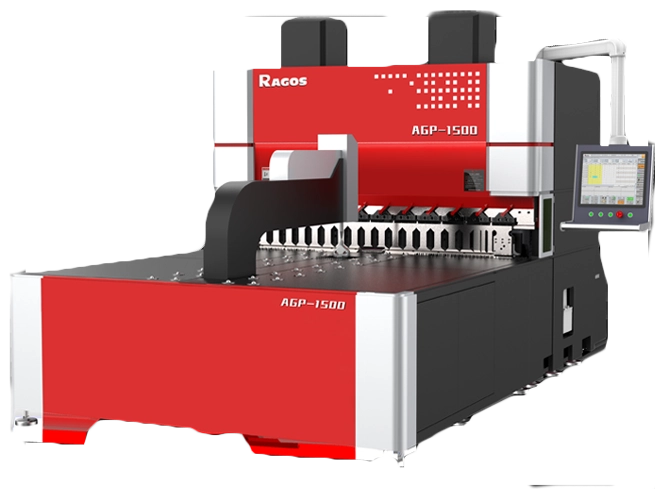
تستخدم فرامل JS RAGOS المضغوطة تقنيتين مثبتتين للقيادة الهجين تحقق توفيرا ملموسا في الطاقة في بيئات الإنتاج الحقيقية.
نظام هاو ePrAX® الهجين سيرفو — محرك سيرفو بدون فرش يرتبط مباشرة بمضخة هيدروليكية ويوفر تدفق الزيت فقط عند الطلب. خلال فترات الخمول — تحميل المشغل, حركة القياس الخلفي, إعداد البرنامج — محرك السيرفو يتباطأ حتى يكاد يكون عن التوقف. لا يوجد دوران هيدروليكي غير ضروري. لا حرارة مهدرة. تصل التوفير في الطاقة إلى 65–73٪ مقارنة بالأنظمة الهيدروليكية التقليدية التي تعمل بنفس جدول الإنتاج.
نظام التحكم في مضخة/صمامات ريكسروث DSVP — نظام دفع ثنائي الوضع يجمع بين الهيدروليكيات التي تتحكم بها المضخة والصمامات. مضخة المكبس المحوري ومحرك السيرفو يوفران الطاقة الهيدروليكية بالضبط عندما يطلبها CNC. مناسب للآلات حتى 2,500T–3,200T. هذا النظام فعال بشكل خاص في بيئات الإنتاج ذات الدورات العالية حيث تعمل الآلة بشكل متكرر — وتزداد التوفير في الطاقة مع كل دورة.
كلا النظامين يحافظان على تحكم كامل في موقع الحلقة المغلقة, ±0.0وضع الرام بمقدار 1 مم أو أفضل, ونفس دقة الانحناء مثل الأنظمة الهيدروليكية التقليدية — فإن توفير الطاقة لا يأتي على حساب الدقة.
للحصول على تحليل تقني كامل لأنظمة القيادة الهجينة المتوفرة على أجهزة JS RAGOS, الدليل نظام DSVP الهجين تغطي تكوينات ePrAX® و Rexroth مع أمثلة على حساب الطاقة الحقيقية.
توفير الطاقة الحقيقي: أرقام يمكنك العمل بها
إليك كيف يتم تقسيم التوفير السنوي للطاقة عبر فئات حمولة المكابح الشائعة, مقارنة أنظمة الهيدروليكية التقليدية مع أنظمة السيرفو-هيدروليكية الهجينة.
| حمولة الآلة | كيلوواط ساعة سنوية تقليدية | كيلوواط ساعة سنوية هجينة | كيلوواط ساعة سنوية موفرة | التوفير السنوي (بسعر 0.12 دولار/كيلوواط ساعة) |
|---|---|---|---|---|
| 100T | ~24,000 كيلوواط ساعة | ~8,400 كيلوواط ساعة | ~15,600 كيلوواط ساعة | ~$1,870 |
| 130 تي | ~32,400 كيلوواط ساعة | ~11,340 كيلوواط ساعة | ~21,060 كيلوواط ساعة | ~$2,527 |
| 200T | ~43,200 كيلوواط ساعة | ~15,120 كيلوواط ساعة | ~28,080 كيلوواط ساعة | ~$3,370 |
| 400T | ~72,000 كيلوواط ساعة | ~25,200 كيلوواط ساعة | ~46,800 كيلوواط ساعة | ~5 دولار,616 |
التقديرات بناء على 8 ساعات في اليوم, 300 يوم في السنة, 65٪ متوسط تقليل الطاقة. تختلف الوفورات الفعلية حسب دورة العمل ومزيج الإنتاج.
ما وراء التوفير المباشر في الكهرباء, كما أن الأنظمة الهجينة والكهربائية تقلل من:
- استهلاك الزيت الهيدروليكي — خزانات نفط أصغر (بعض الأنظمة الهجينة تستخدم حجم زيت أقل بنسبة 60–70٪)
- تكاليف تغيير الزيت — انخفاض الحرارة الناتج يعني تحلل الزيت أبطأ; تمتد فترات التغيير من 12 شهرا إلى 24–36 شهرا
- حمل نظام التبريد — تقليل توليد الحرارة يعني أن تكييف الهواء في حاوية الآلات يعمل أقل
وفقا لمعايير ISO 14955, تقلل فرامل الضغط الكهربائية بالكامل من انبعاثات ثاني أكسيد الكربون بحوالي 182 طنا خلال فترة 5 سنوات مقارنة بالآلات الهيدروليكية التقليدية. للمتاجر التي تعمل تحت شهادة إدارة البيئة ISO 14001, أفرامل الضغط CNC الموفرة للطاقة يدعم وثائق الامتثال الخاصة بك بشكل مباشر.
بالنسبة لفئة 100 طن حيث تتقاطع التوفير في الطاقة ومرونة الإنتاج, الفرامل ضغط CNC بوزن 100 طن لإنتاج الفولاذ الإنشائي يعرض كيف يوفر التكوين الهجين عوائد عملية يومية.
فرامل CNC موفر للطاقة: ما وراء تكاليف الكهرباء
أفرامل الضغط CNC الموفرة للطاقة تقدم فوائد تتجاوز فاتورة الكهرباء — وبعضها لا يقل قيمة عن توفير الطاقة نفسه.
تقليل الضوضاء — تعمل مكابح الضغط الهيدروليكية التقليدية عند 75 ديسيبل بسبب تشغيل المضخة المستمر. يعمل فرامل ضغط سيرفو هجينة عند 25–50 ديسيبل — أقرب إلى بيئة مكتبية هادئة أثناء الخمول. هذا الفرق مهم في ورش التصنيع حيث يقضي المشغلون نوبات كاملة جنبا إلى جنب مع الآلة. كما يؤثر على متطلبات حماية السمع وإرهاق المشغلين خلال فترات الإنتاج الطويلة.
انخفاض توليد الحرارة — المضخات الهيدروليكية التي تعمل باستمرار تولد حرارة تسخن الزيت الهيدروليكي وبيئة الورشة المحيطة. الأنظمة الهجينة والكهربائية تولد حرارة أقل بكثير — الزيت البارد يعني لزوجة مستقرة, وهذا يعني أداء انحناء أكثر ثباتا طوال فترة التحويل دون تصحيح انحراف حراري.
حجم زيت أصغر — يستخدم نظام ePrAX® كمية صغيرة, الدائرة الهيدروليكية المغلقة. بعض التكوينات الهجينة تقلل حجم خزان الزيت بنسبة 60–70٪ مقارنة بالأنظمة الهيدروليكية التقليدية. زيت أقل يعني تكلفة استهلاك أقل, تقليل المخاطر البيئية من التسريبات, وتخلص أبسط عند فترات تغيير الزيت.
عمر المكون الأطول — محركات السيرفو التي تعمل حسب الطلب تشهد وقت تشغيل تراكم أقل لكل وردية مقارنة بالمحركات التقليدية التي تعمل بشكل مستمر. المحامل, الأختام, ومكونات المحرك تدوم لفترة أطول عندما لا تعمل 8 ساعات عند الحمل الكامل بغض النظر عن الطلب الإنتاجي.
للمتاجر مقارنة الصورة الكاملة لتكلفة التشغيل بين الأنظمة الكهربائية والهيدروليكية, الدليل مقارنة بين فرامل كهربائية وفرامل هيدروليكية يغطي الصيانة, دقة, سرعة, وتكلفة الملكية الإجمالية بالتفصيل.
أي مكبح ضغط CNC موفر للطاقة يناسب ورشتك?
ليس كل ورش يحتاج إلى نفس الحل. استخدم إطار الاختيار هذا لمطابقة الإطار الصحيحفرامل الضغط CNC الموفرة للطاقة اكتب إلى ملف الإنتاج الخاص بك.
فرامل ضغط كاملة بنظام سيرفو-كهربائي — الأفضل عندما:
- متطلبات الحمولة لديك دائما أقل من 150 طن
- أنت تثني مادة رقيقة (00.5مم – 6 مم) بحجم عال
- الدقة أمر حاسم — ±0.00تكرار 1 مم مهم لقطعك
- متجرك يعاني من مخاوف بشأن تكلفة الطاقة وقوانين الضوضاء
- للمتاجر في هذا الملف, ال صفحة منتج فرامل الفرمل الكهربائية-السيرفو-كهربائية تغطي المواصفات عبر كامل مجموعة السيارات الكهربائية.
السيرفو-هيدروليكي الهجين — الأفضل عندما:
- يتراوح احتياج الحمولة بين 80 طن و600 طن
- تقوم بإنتاج مختلط — أحيانا ورقة رقيقة, أحيانا صفيحة سميكة
- تريد توفير كبير في الطاقة بدون قيود الحمولة الناتجة عن الكهرباء الكاملة
- تحتاج إلى شخص مثبت, آلة ذات عمر طويل للخدمة لبيئات الإنتاج المتطلبة
- لمتطلبات الهجين عالي السعة, ال فرامل CNC بوزن 600 طن يظهر ما يقدمه نظام السيرفو الهجين في الطرف الثقيل من نطاق الإنتاج.
الهيدروليكية التقليدية المطورة — الأفضل عندما:
- الميزانية هي القيد الأساسي وأنت لم تستبدل الجهاز بعد
- يمكنك تقليل استهلاك الطاقة من خلال عادات المشغل — إعداد أسرع, فترات خمول أقصر
- حجم الإنتاج لديك منخفض بما يكفي بحيث تكون خسائر وقت الخمول ضئيلة جدا
للمتاجر مقارنة بين الشركات المصنعة قبل شراءفرامل الضغط CNC الموفرة للطاقة, الدليل علىأفضل ماكينات فرامل الضغط CNC يغطي الشركات المصنعة الرئيسية وتكويناتها الموفرة للطاقة جنبا إلى جنب. يمكن للمتاجر التي تتلقى المصادر من الخارج أيضا مراجعةدليل مصنع CNC للفرامل المضغوطة في الصين للحصول على إرشادات حول التحقق من مواصفات الطاقة قبل الطلب.
النسخة الكاملةنظرة عامة على نطاق الفرامل في JS RAGOS يغطي جميع التكوينات — من الآلات المدمجة ذات السيرفو الكهربائية إلى الهيدروليكية الهجينة الثقيلة — مع تحديد مواصفات الطاقة لكل طراز.
الأسئلة الشائعة حول فرامل الضغط CNC الموفرة للطاقة
ما هو فرامل CNC الموفرة للطاقة?
فرامل الضغط CNC الموفرة للطاقة هي آلة ثني مزودة بنظام دفع بمحرك سيرفو — إما هجين سيرفو-هيدروليكي أو سيرفو كهربائي بالكامل — يستمد الطاقة فقط أثناء الانحناء النشط بدلا من العمل المستمر مثل المضخات الهيدروليكية التقليدية. اعتمادا على النظام, تتراوح التوفير في الطاقة بين 30٪ إلى 80٪ مقارنة بفرامل الضغط الهيدروليكية التقليدية التي تعمل بنفس جدول الإنتاج.
كم من الطاقة يوفرها فرامل الضغط الهجينة CNC?
توفر فرامل الضغط الهجينة ذات السيرفو والهيدروليكية حوالي 30–70٪ من استهلاك الكهرباء السنوي مقارنة بالماكينة الهيدروليكية التقليدية ذات السرعة الثابتة. لآلة تزن 130 طنا تعمل في وردية مدتها 8 ساعات, 300 days per year, وهذا يعادل تقريبا 21,000 كيلوواط ساعة مدخرة سنويا — أو حوالي 2 دولار,500 دولار سنويا بأسعار الكهرباء الصناعية القياسية.
هل مبح الضغط الكهربائي الكامل أكثر كفاءة في استهلاك الطاقة من الهجين?
نعم, فرامل الضغط السيرفو-كهربائي الكاملة أكثر كفاءة في استهلاك الطاقة قليلا أثناء الإنتاج. تستهلك حوالي 5 كيلوواط ساعة عند الحمل الكامل — أي أقل بحوالي 67٪ من الآلة الهيدروليكية التقليدية. لكن, الأنظمة الكهربائية الكاملة عملية حتى حوالي 150–200 طن. للأعمال ذات الحمولة الأعلى, توفر أنظمة السيرفو-هيدروليكية الهجينة أفضل توازن بين توفير الطاقة وقدرة الانحناء الخام.
كم من الوقت يستغرق استرداد التكلفة الإضافية لفرامل CNC المكبس الموفرة للطاقة?
وفقا للتحليل المقارن المبني على معايير ISO 14955, تحقق مكابح الضغط الكهربائية بالكامل عائد تكلفة الطاقة خلال حوالي 2.3 سنة. أنظمة سيرفو-هيدروليكية هجينة, مع علاوة سعرية أقل مقارنة بالهيدروليكية التقليدية, عادة ما تحقق العائد خلال سنة إلى سنتين من خلال توفير الطاقة والصيانة مجتمعة.
ما هي الفوائد الأخرى التي يقدمها مكبح CNC الموفر للطاقة بخلاف انخفاض تكاليف الكهرباء?
ما بعد توفير الكهرباء, كما أن فرامل الضغط الموفرة للطاقة تقلل من مستويات الضوضاء (من 75 ديسيبل على الهيدروليكية التقليدية إلى 25–50 ديسيبل في الأنظمة الهجينة), انخفاض توليد الحرارة, عمر زيت هيدروليكي أطول, متطلبات حجم الزيت الأصغر, فترات خدمة المكونات الممتدة, وفي ورش معتمدة من ISO 14001, تخفيضات قابلة للقياس في انبعاثات CO₂ تدعم وثائق الامتثال البيئي.